
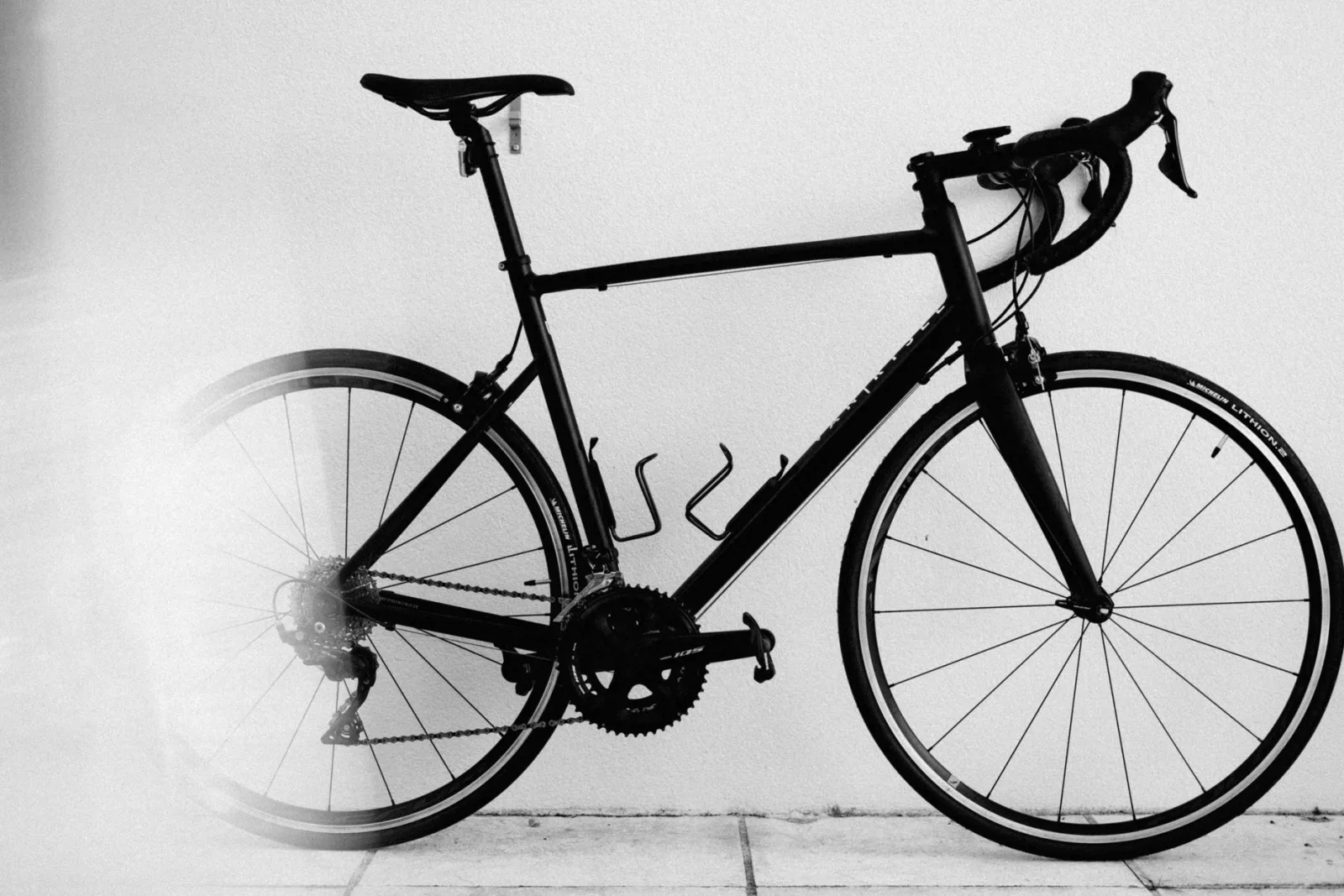
In brief:
- Above 40 km/h on flat ground, roughly 90% of a rider’s power goes into overcoming air resistance, against 10% for rolling resistance.
- Giant claims a 6.21-watt drag reduction at 40 km/h on its Propel Advanced SL compared with the previous generation.
- Canyon claims the Aeroad CFR needs under 204 watts at 45 km/h, a figure measured by TOUR Magazine in a wind tunnel.
- UCI rules set a minimum race bike weight of 6.8 kg (rule 1.3.019), which limits the point of trading aerodynamics for a few saved grams.
What is an aero road bike?
An aero road bike is a road bike whose frame, fork and handlebar are shaped to cut air resistance rather than to minimise weight. Tubes use truncated airfoil profiles, the cockpit is integrated to hide cables, and wheels run deep rims of 50 to 65 mm.
This category grew alongside endurance and all-round road bikes as brands realised that aerodynamic drag outweighs frame weight once speed increases. Manufacturers now wind-tunnel test their frames, Giant and Canyon among them, to put a number on the gains from one generation to the next.
Why aerodynamics beats weight at speed
The force opposing a rider grows with the square of speed, and the power needed to overcome it grows with the cube of speed. Climbing a hill at 10 km/h is mostly a fight against gravity, so frame weight matters. Riding at 40 km/h on flat ground is mostly a fight against air.
Is an aero bike really faster? What the numbers say
The share of power spent fighting the air
On flat ground, from 40 km/h, air resistance absorbs roughly 90% of a rider’s total power output, with tyre rolling resistance down to about 10% of the total. Below 40 km/h this share drops in favour of rolling resistance, and on climbs weight becomes the dominant factor again.
| Resistance factor | Share of power at 40 km/h on flat ground |
|---|---|
| Air resistance | About 90% |
| Tyre rolling resistance | About 10% |
“Aerodynamic drag becomes the dominant force above 40 km/h on flat terrain.” Source: Sci-Sport, 2026
The gains manufacturers claim
Brands measure their gains generation against generation, rarely one brand against a competitor, which makes direct comparisons difficult. Giant claims its Propel Advanced SL cuts aerodynamic drag by 6.21 watts at 40 km/h compared with the previous model. Canyon, for its part, claims the Aeroad CFR needs under 204 watts at 45 km/h in wind tunnel testing run by TOUR Magazine, which would make it one of the best-performing production frames on this metric.
The Aeroad CFR is Canyon’s flagship frame, sold direct to consumer with a 6-year frame warranty included.
Aero, endurance or all-round road bike: what’s the difference?
The road bike market has split into three families with different priorities.
| Bike type | Position | Priority | Who it’s for |
|---|---|---|---|
| Aero | Low and aggressive | Flat-ground speed | Riders averaging above 32-35 km/h, pack riding, time trials, triathlon |
| Endurance | Upright | Long-ride comfort | Rides over 4 hours, hilly sportives |
| All-round | In between | Balance of weight, aero and comfort | Mixed riding, one bike for everything |
A classic road bike, climbing or all-round type, remains the better choice whenever the route involves significant elevation gain, since aerodynamic gains become marginal on climbs. An aero bike, on the other hand, pulls ahead on flat or rolling routes ridden at a sustained pace.
Who actually needs an aero bike?
An aero bike isn’t reserved for professional racers. It suits anyone who regularly averages above 32 to 35 km/h, rides time trials or triathlons, or sits in a pack during fast-paced sportives. Below that threshold, the difference against a classic road bike becomes hard to feel on the road.
Pros and cons of an aero road bike
The advantages
- Measurable power savings at the same speed, especially above 35 km/h
- Increased frame stiffness, useful for accelerations and sprints
- Integrated cables and cockpit that cut drag even further
- The weight gap with a classic frame has narrowed thanks to high-modulus carbon
The drawbacks
- A lower, more aggressive position that demands flexibility and core strength
- Reduced comfort on long rides compared with an endurance bike
- Greater sensitivity to crosswinds with deep-section wheels
- Generally higher budget at the top of the range, due to wind-tunnel work and materials
How to choose an aero road bike
- Define your actual riding style first: an aero bike only makes sense if most rides happen on flat or rolling terrain at a sustained pace.
- Check your frame size before buying anything, since an aero bike’s aggressive position amplifies the discomfort of a poor fit. The bike size guide details the inseam-based calculation method.
- Compare rim depths: 40 to 50 mm for an all-round compromise, 60 mm and above for pure speed on stable, low-wind terrain.
- Test the riding position at a bike shop or through a bike fit before investing in a low, long frame, especially for smaller sizes where the geometry tightens up, a point also covered in our article on road bikes for women.
- Check UCI rules if the bike is meant for sanctioned racing: the minimum weight remains set at 6.8 kg, which limits the point of trading aerodynamics for a few saved grams.
Frequently asked questions
Is an aero road bike really faster?
Yes, at sustained speed. Above 35 to 40 km/h, air resistance absorbs roughly 90% of a rider’s power output on flat ground, against barely 10% for rolling resistance. A shaped frame and wheels cut that drag and save several watts at the same speed, an effect that becomes negligible below 25 km/h or on steep climbs.
How many watts does an aero bike actually save?
Savings vary by model and generation: Giant claims 6.21 fewer watts of drag on the Propel Advanced SL compared with the previous generation at 40 km/h, while Canyon claims a required power under 204 watts at 45 km/h for the Aeroad CFR, based on wind tunnel testing by TOUR Magazine. These figures compare one generation against the previous one, not one brand against another.
Aero bike or endurance bike, which one should I choose?
An aero bike suits riders who regularly average above 32 to 35 km/h, ride in a pack, race time trials or triathlons. An endurance bike, with a more upright position and wider tyres, stays the better choice for long rides where comfort matters more than the last watts saved in the wind.
Is an aero bike heavier than a regular road bike?
The weight gap has narrowed sharply in recent years thanks to high-modulus carbon frames. A high-end aero bike is still rarely the lightest model in a brand’s range, since shaped tubes need more material than plain round tubes.