In short:
- Bikepacking means travelling self-supported by bike with soft bags attached directly to the frame, without racks.
- Three bags are enough for a weekend: saddle (10 to 16 litres), frame (4 to 8 litres) and handlebar (8 to 15 litres).
- A successful first trip lasts 2 days with 60 to 80 km per stage.
- The full kit, bike excluded, costs 500 to 1,200 euros.
Bikepacking: travelling light by bike
Bikepacking is the heir of bike touring, adapted to trails. By removing racks, the bike stays nimble on tracks and singletrack.
The practice took off with the rise of the gravel bike, whose frames include dedicated mounts. A hardtail mountain bike also works very well.
Bags and what goes in them
| Bag | Volume | Typical contents |
|---|---|---|
| Saddle | 10 to 16 L | Clothes, sleeping bag |
| Frame | 4 to 8 L | Tools, food, power bank |
| Handlebar | 8 to 15 L | Tent or bivvy, sleeping mat |
| Top tube | 0.5 to 1 L | Snacks, phone |
Total luggage weight should stay between 6 and 9 kg for a weekend. Heavy items go as close to the centre of the bike as possible, in the frame bag.
Planning the route and stages
For a first trip, a 2-day loop close to home limits surprises. Cycle routes and greenways are ideal terrain, like those described in the guide to Alsace cycling routes.
Daily distance depends on the terrain: 80 to 120 km on smooth tracks, 50 to 70 km in the mountains. 1,000 m of climbing per day is reasonable on a loaded bike.
Finally, a correctly sized bike prevents pain over several days: the bike size chart guide helps you check.
Frequently asked questions
How do you prepare your first bikepacking trip?
For a first bikepacking trip, aim for a 2-day weekend with 60 to 80 km per stage, on a familiar route with resupply points. The kit fits in three bags (frame, saddle, handlebar) for 6 to 9 kg of luggage. A gravel bike or a hardtail mountain bike is perfectly suited.
What is the difference between bikepacking and bike touring?
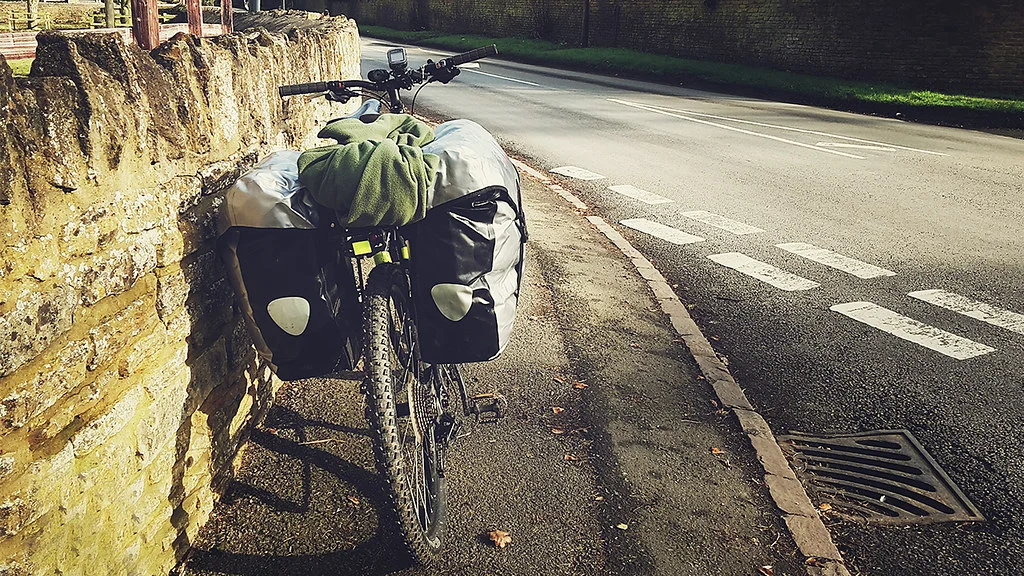
Bike touring uses racks and side panniers, suited to roads. Bikepacking straps soft bags directly to the frame, saddle and handlebars, which keeps the bike lighter and lets you ride on trails.
How much does bikepacking gear cost?
A set of three bikepacking bags costs between 150 and 400 euros. Adding a lightweight tent or bivvy, sleeping bag and mat, the full kit comes to 500 to 1,200 euros, bike not included.