
In short:
- There are four families of indoor bike trainer: rollers, wheel-on trainers, direct-drive smart trainers and smart bikes.
- Direct-drive smart trainers, between 500 and 1,500 euros, offer power accuracy of 1 to 2%.
- Training apps cost around 10 to 20 euros a month.
- A structured 1-hour session is worth about 1 hour 30 of road riding.
The four types of indoor bike trainer
An indoor bike trainer keeps you fit when weather or darkness stops you riding outside. The right choice depends on budget and ambition.
| Type | Price | Power accuracy | Best for |
|---|---|---|---|
| Rollers | 100 to 300 euros | None (unless power meter) | Balance and cadence work |
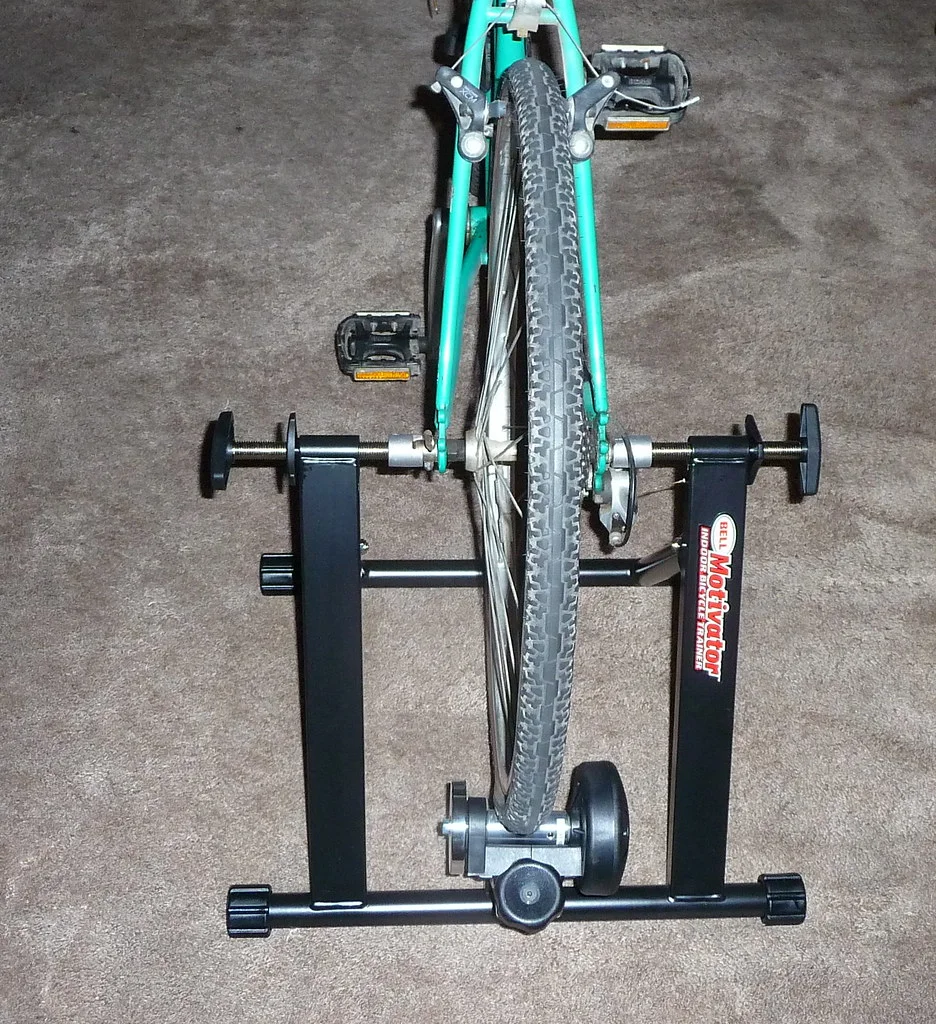
| Wheel-on trainer | 150 to 400 euros | 3 to 5% | Staying fit on a budget |
| Direct-drive | 500 to 1,500 euros | 1 to 2% | Structured training |
| Smart bike | 2,500 to 4,000 euros | 1% | Heavy use, dedicated space |
Why smart trainers dominate
A smart trainer automatically adjusts resistance to hold a target power or simulate a gradient. The best models handle sprints above 2,000 watts.
Paired with an app such as Zwift, TrainerRoad or MyWhoosh, it turns winter into a period of progress. A sportive training plan can therefore start as early as December.
Setting up your indoor trainer properly
A powerful fan is essential: without airflow, core temperature rises and power drops by 5 to 10% within minutes.
A mat protects the floor from sweat and reduces vibrations. For riders also looking for a dedicated bike, the road bike guide helps pick a compatible one, and buying a bike online often lets you order both at once.
Frequently asked questions
Which indoor bike trainer should you choose?
For serious training, the direct-drive smart trainer is the benchmark: it costs 500 to 1,500 euros, measures power with 1 to 2% accuracy and simulates gradients of up to 20% or more. Wheel-on models, between 150 and 400 euros, are enough to stay fit. Rollers, from 100 euros, mainly work on balance and pedalling technique.
Direct-drive or wheel-on trainer?
A direct-drive trainer replaces the bike’s rear wheel: it is quieter, more accurate and does not wear the tyre. A wheel-on trainer is quicker to set up but less accurate and noisier.
How long should you ride on an indoor trainer?
Sessions of 45 to 75 minutes are enough because there is no freewheeling or stopping. One hour of structured indoor training is generally worth about 1 hour 30 of outdoor riding in terms of training load.